

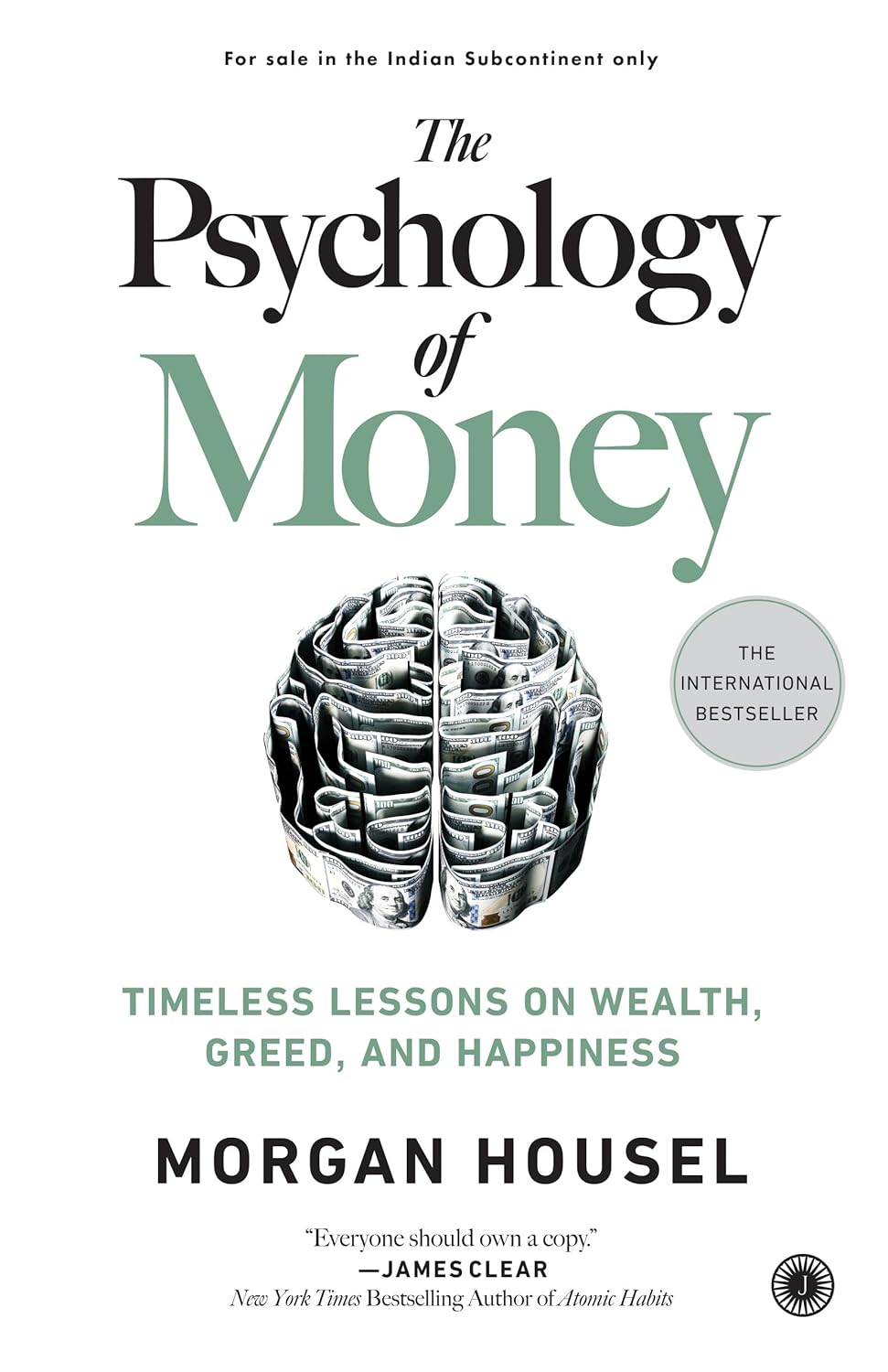
Discover why The Psychology of Money by Morgan Housel is one of the best personal finance books. Read our honest review, pros, cons, key features, and buying guide.
The Psychology of Money Book Review
When it comes to personal finance, most people spend years learning how to earn money but very little time learning how to think about money. That’s exactly what The Psychology of Money by Morgan Housel teaches.
Unlike traditional finance books filled with formulas and investment jargon, this book focuses on the emotions, behaviors, and decisions that influence financial success. Whether you’re a student, salaried professional, entrepreneur, or investor, the lessons inside remain relevant for years.
If you’re searching for one finance book that changes your mindset rather than simply teaching investment strategies, this is a strong choice.
Product Overview
| Feature | Details |
|---|---|
| Product Name | The Psychology of Money |
| Author | Morgan Housel |
| Category | Personal Finance / Self Help / Investing |
| Language | English |
| Format | Paperback / Kindle / Audiobook |
| Ideal For | Beginners, Investors, Students, Entrepreneurs |
| Rating | Highly rated worldwide |
The Psychology of Money explores why financial success depends less on intelligence and more on behavior.
Through 19 engaging stories, Morgan Housel explains how patience, discipline, long-term thinking, and emotional control play a much bigger role in building wealth than trying to predict markets or find the next big investment.
Rather than teaching complicated investment formulas, the book helps readers develop healthy financial habits that can last a lifetime.
Key Features
✅ Easy-to-understand language
✅ Real-life financial stories
✅ 19 practical lessons about money
✅ Focuses on financial behavior instead of mathematics
✅ Suitable for beginners and experienced investors
✅ Helps improve long-term financial decision-making
✅ Short chapters for quick reading
✅ Timeless financial principles
Why This Book Stands Out
Most finance books teach how to invest.
This book teaches how successful people think about money.
It explains:
- Why saving matters more than earning a high income
- Why luck and risk influence financial success
- How emotions affect investment decisions
- Why long-term consistency beats short-term gains
- Why wealth often looks different from luxury
These insights make the book valuable regardless of your income level.
Pros
✔ Extremely beginner friendly
✔ Simple storytelling approach
✔ Practical financial lessons
✔ Helps build better money habits
✔ Short and engaging chapters
✔ Great gift for students and young professionals
✔ Applicable to investing, business, and personal life
Cons
✘ Not a detailed investing guide
✘ Few actionable investment strategies
✘ Readers seeking advanced stock analysis may find it basic
Who Should Buy This Book?
This book is ideal for:
- College students
- Working professionals
- Entrepreneurs
- New investors
- Business owners
- Anyone interested in financial freedom
- Readers looking to improve money habits

Who May Skip It?
You may want another resource if you are looking for:
- Technical stock market analysis
- Day trading strategies
- Advanced portfolio management
- Detailed financial calculations
What You’ll Learn
After reading this book, you’ll understand:
- How emotions influence money decisions
- Why patience creates wealth
- The importance of compounding
- How to avoid common financial mistakes
- Why financial independence matters more than appearing rich
- How consistent saving can outperform risky investing
Our Rating
| Category | Rating |
|---|---|
| Content Quality | ⭐⭐⭐⭐⭐ |
| Readability | ⭐⭐⭐⭐⭐ |
| Practical Advice | ⭐⭐⭐⭐⭐ |
| Beginner Friendly | ⭐⭐⭐⭐⭐ |
| Value for Money | ⭐⭐⭐⭐⭐ |
Overall Rating: 4.9/5 ⭐
Frequently Asked Questions
Is The Psychology of Money good for beginners?
Yes. It is considered one of the best personal finance books for beginners because it focuses on simple concepts rather than complex financial calculations.
Is this book only about investing?
No. It primarily focuses on financial behavior, wealth building, saving habits, and decision-making.
Can teenagers read this book?
Absolutely. The language is simple, making it suitable for teenagers, students, and adults.
Is it worth buying?
If you want to improve your financial mindset and make better money decisions throughout life, this book offers excellent value.
Final Verdict
The Psychology of Money isn’t just another finance book—it’s a guide to understanding why people make financial decisions and how better habits can lead to long-term wealth.
Instead of chasing quick riches, it encourages readers to focus on patience, consistency, and smart decision-making. These lessons remain valuable regardless of changing market conditions.